How We Taste
How We Taste
Featuring Dr. Dana Small, Chef Wylie Dufresne, & Peter Meehan
May 14, 2014
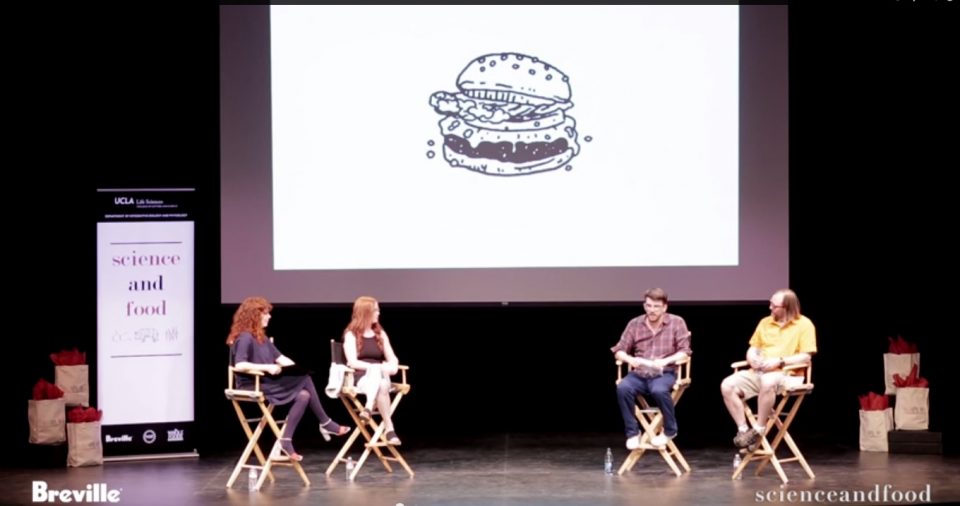
As part of our 2014 public lecture series, we explored the concept of taste from the perspectives of a scientist, a chef, and a food writer. Dr. Dana Small described how our brains respond to flavors. Chef Wylie Dufresne of Wd~50 presented his creative approach to generating surprising food flavors and textures. Peter Meehan shared his experiences with food and taste and how they have shaped his writing, both as a cookbook author and former writer for The New York Times.
Check out the highlights or watch the full lecture below
Wylie Dufresne on Science in the Kitchen and It’s Impact on WD~50
“Cooking is a lot of things and one of the things we discovered was that cooking is a science. There’s certainly some biology. There’s certainly some physics. There’s an awful lot of chemistry at play all the time when you’re cooking… One of the main reasons I opened up WD~50 … was to create a space where I could continue my culinary education, where my staff could continue their culinary education, and where you as a diner, if you so choose, could continue your culinary education.”
Wylie Dufresne on his Aerated Foie Gras
“How could we, using some very modern technology, walk the idea of a mousse down the road? … Part of the problem with a mousse is that it usually has a lot of stuff in it besides the main ingredient… So what we wanted to do was to figure out if we could create a mousse of foie gras, or if we could aerate foie gras without adding or taking too much away from the flavor.”
Peter Meehan on Developing Taste and Eating Everything
“The first step in developing the taste to become a restaurant critic: Eat … I tried to just each everything… the more I ate the more I understood about food and the more I could draw connections about one thing and another… You start to make these mental points on a map of where flavors are in relation to each other.”
Dr. Dana Small Defines Taste
“There’s molecules and ions in the foods that we eat and they bind to cells on these elongated taste receptors [tastebuds]. When enough binds, the cells get excited. They send a signal to the brain that the brain then interprets as a taste … Taste evolved to detect the presence of nutrients and toxics … You’re born knowing that you like sweet and dislike bitter … because you don’t want to have to learn that sweet is energy and bitter is toxin.”
Dr. Dana Small Defines Flavor and How It’s Different from Taste
“Flavor, on the other hand, preferences and liking for flavors is entirely learned. This has the advantage of allowing us to learn to like available energy sources and learn to avoid particular food items … The flavor allows us to identify a particular item that was associated with a particular consequence that we need to remember… whereas the taste provides just a signal about whether an energy source as in the case of sweet is present.”
Watch the Entire Lecture