Anatomy of a hot chocolate

Photo credit: Flickr/louish
Hot chocolate: it’s a winter staple. Amidst falling temperatures and dreary skies, there’s nothing quite like taking a swig of this sumptuous beverage and seeking warm refuge in the delights of a steaming mug. Hot chocolate is as straightforward as drinks go: at its core, it’s milk, cocoa powder, and sugar. Despite its simplicity, this cold-weather classic is swirling with science.
The backbone of any decent hot chocolate is milk. Beyond water, milk is perhaps the most basic and familiar substance to humans. We’re all born drinking some form of it, but how often do we stop and think about its underlying science? Milk is an emulsion, which is a mixture of two immiscible liquids—in this case, water and fat. The water-based component of milk is loaded with vitamins, minerals, and protein and contains immiscible fat globules suspended throughout. How do water and fat coexist peacefully in solution together? The answer lies in emulsifiers, which are molecules that are both water- and fat-soluble. Milk contains proteins, namely casein, that attract and unite the fluids that would otherwise separate. Rich, silky, and chemically intriguing, this dairy product serves as the perfect vehicle for chocolate (1).

Photo credit: Flickr/chocolatereviews
Chocolate serves as the heart of the beverage. Some recipes call for it in the form of cocoa powder. Cocoa powder mixed in with your milk is a colloid—a type of mixture in which solid particles are dispersed throughout a fluid. Another popular culinary colloid you may recognize is coffee, which contains small coffee particles dispersed in water.

Photo credit: Flickr/csb13
A glass of hot chocolate simply isn’t complete with a dollop of whipped cream plopped on top. Lauded for its decadent mouthfeel, cream is an emulsion of butterfat and water, similar to milk but with a higher fat content. Fresh milk left undisturbed will separate into two layers; the top becomes enriched with fat globules that can be skimmed off as cream, leaving behind a relatively fat-free layer—skim milk. Cream and milk have remarkably different fat contents, as cream is required to have at least 30% milk fat compared to whole milk which is a mere 3%.
With some simple agitation, willpower, and a whisk, we can transform heavy cream into whipped cream, a culinary foam. Similar to emulsions, foams combine two immiscible substances, but instead of water and fat, air or gas is entrapped within a fluid or solid. Whisking incorporates air into the cream, and the newly introduced bubbles are held captive by the structure of the foam. Fluids and gases have very different properties, so how does agitation keep them together? Agitation disorients the fat globules and strips away their protective membranes, forcing them to cling to other fat molecules or aggregate around air bubbles—anything to avoid having to be in contact with water. Agitate your cream enough and you’ll wind up with stiff peaks when these fat-encapsulated air bubbles begin to form a stable network (2).
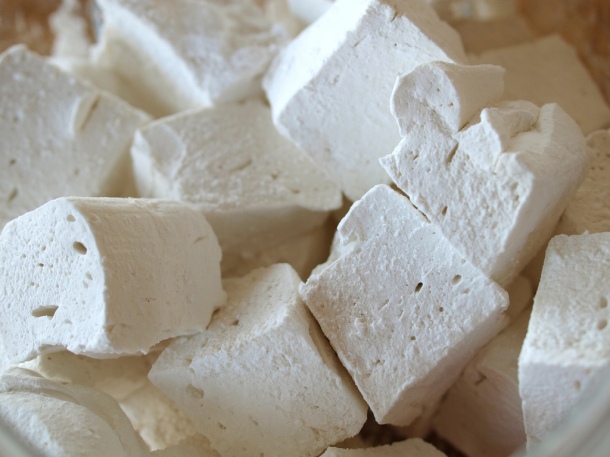
Photo credit: Flickr/knitsteel
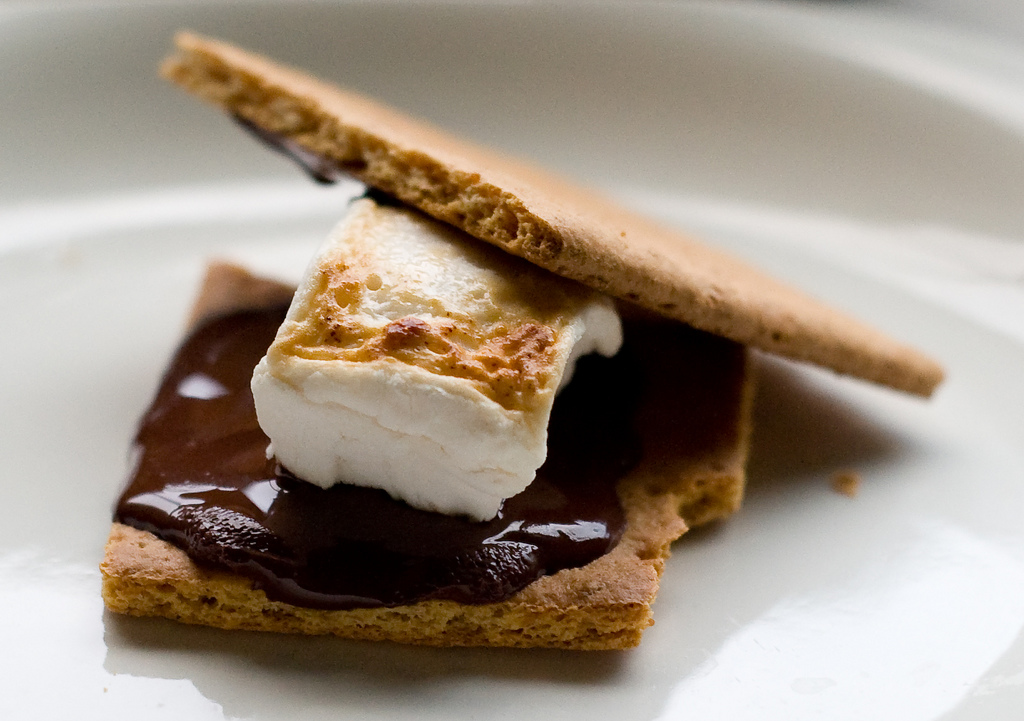
Whether they’re being roasted over a campfire or floating lazily on the surface of your hot chocolate, marshmallows are a surefire way to please and are another way to enhance your chocolate-drinking experience. Marshmallows were originally made as a meringue (yet another culinary foam!) consisting of whipped eggs and sugar flavored with the juice from roots of the marsh mallow plant. The making of marshmallows has since evolved so that now they are created by aerating a mixture of simple sugar syrup and gelatin to form a foam that stabilizes once the gelatin sets. Whipping incorporates air bubbles that are trapped in the solid matrix, forming these springy and sugary confections that pair exceptionally well with chocolate (1).
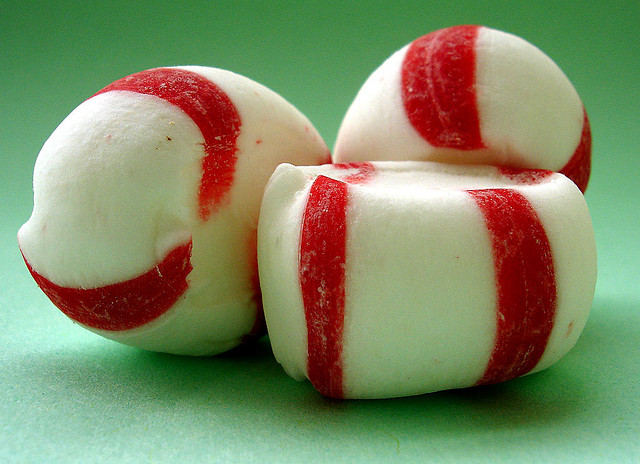
Hot chocolate is the ultimate winter beverage. It’s creamy, decadent and versatile. Drink it plain or spice it up with some chili powder, orange, or peppermint and you’ll surely find a style that will leave you positively foaming at the mouth.
References cited
- McGee, Harold. On Food and Cooking: The Science and Lore of the Kitchen. New York: Scribner, 2004. Print.
- Lower, Claire. Cream Science: On Whipping, Butter, and Beyond. Serious Eats. 2014.
 About the author: Mai Nguyen is an aspiring food scientist who received her B.S. in biochemistry from the University of Virginia.