Science and Food
  • Home
  • Public Events
    • Video Gallery
    • 2022 People, Food, & Climate
    • 2019 Food Waste
    • 2017 Future of Food
    • 2016 Public Lecture Series
    • 2014 Public Lecture Series
    • 2013 Public Lecture series
    • 2012 Public Lecture Series
  • Future Food Fellows
  • Building Community
  • Course
  • Press
  • Support Us
  • Contact Us
  • Click to open the search input field Click to open the search input field Search
  • Menu Menu

Space Whisky & “Natural Foods”

December 17, 2015/in What We're Reading/by Grant Alkin

imrs

A vial of unmatured malt whisky was sent into space three years ago, and has recently returned to Earth for a taste test. This space whisky was compared to the same whisky that was matured (on Earth) in charred oak barrels. Guess which whisky contains aromas of antiseptic smoke and rubber. While we’re comparing two things, AsapSCIENCE discusses the chemicals and ingredients in processed foods versus natural foods to explain why “chemical-free” is not a realistic food label.
Read more

0 0 Grant Alkin https://sites.lifesci.ucla.edu/ibp-scienceandfoodnew/wp-content/uploads/sites/123/2016/09/newlogoSm-2-300x31.png Grant Alkin2015-12-17 10:00:072015-12-17 10:00:07Space Whisky & “Natural Foods”

Futuristic Cranberries & 1959 Cranberries

December 3, 2015/in What We're Reading/by Grant Alkin

12287209_2489610403104_1228556333_o-a3a75413f95eaa79b7fc27f33a803b95ea66656d-s800-c85

In the future, cranberries may be sweet enough to snack on without sugar, thanks to the efforts of biologists and geneticists at the University of Wisconsin-Madison. Going back in time to 1959, a few cranberry batches tested positive for aminotriazole, an herbicide, causing a nationwide panic and collapsing the cranberry industry almost overnight.
Read more

0 0 Grant Alkin https://sites.lifesci.ucla.edu/ibp-scienceandfoodnew/wp-content/uploads/sites/123/2016/09/newlogoSm-2-300x31.png Grant Alkin2015-12-03 10:00:552015-12-03 10:00:55Futuristic Cranberries & 1959 Cranberries

Pumpkin Domestication & Fruit Benefits

November 19, 2015/in What We're Reading/by Grant Alkin

sn-squashes

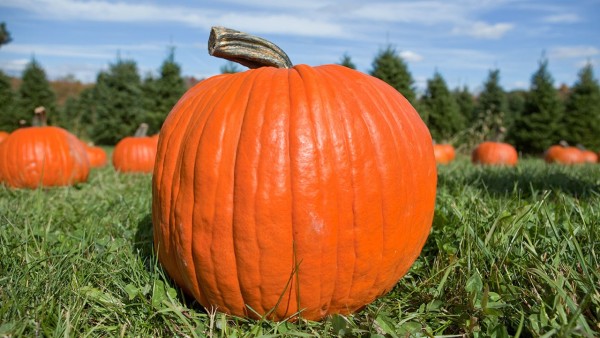
If pumpkins are on your menu this Thanksgiving, be thankful that hundreds of years of human domestication has turned this once super-bitter squash into a sweet dessert. Furthermore, human intervention may have prevented gourds and squashes from extinction. As for reasons to be thankful for cranberries, scientific research shows that a compound within cranberries could prevent urinary tract infections.
Read more

0 0 Grant Alkin https://sites.lifesci.ucla.edu/ibp-scienceandfoodnew/wp-content/uploads/sites/123/2016/09/newlogoSm-2-300x31.png Grant Alkin2015-11-19 10:00:152015-11-19 10:00:15Pumpkin Domestication & Fruit Benefits

Better Hops & Perfect Wine

November 5, 2015/in What We're Reading/by Grant Alkin

GettyImages-123518640-582x388

Agricultural geneticist and self-proclaimed “craft beer fanatic”, Sean Myles began breeding hops plants that are resistant to mildew. Other breweries are now using traditional breeding techniques to breed hopes varieties with novel flavors, changing the craft beer game. For wine lovers, there’s Linda Bisson, a yeast geneticist at UC Davis working on the winemaking issue of “stuck” fermentation, a phenomenon when yeast added to wine fail to fully ferment.
Read more

0 0 Grant Alkin https://sites.lifesci.ucla.edu/ibp-scienceandfoodnew/wp-content/uploads/sites/123/2016/09/newlogoSm-2-300x31.png Grant Alkin2015-11-05 10:00:462015-11-05 10:00:46Better Hops & Perfect Wine

Space Candy & 3D-printed Candy

October 22, 2015/in What We're Reading/by Grant Alkin

candy corn in space

In space, NASA astronaut Don Pettit uses candy corn for a zero-gravity candy corn demonstration that illustrates how surfactant molecules behave. In Germany, Café Gruen Ohr offers customers the chance to customize their own candy using a 3D printer.
Read more

0 0 Grant Alkin https://sites.lifesci.ucla.edu/ibp-scienceandfoodnew/wp-content/uploads/sites/123/2016/09/newlogoSm-2-300x31.png Grant Alkin2015-10-22 10:00:052015-10-22 10:00:05Space Candy & 3D-printed Candy

Chocolate’s Future & Mysteries

October 8, 2015/in What We're Reading/by Grant Alkin

Twilley-Preventing-a-Future-Without-Chocolate-690

In the town of Reading, located in Berkshire, England, exists the International Cocoa Quarantine Centre, where tropical cacao plants are kept to prevent the spread of pests and diseases which threaten the world’s chocolate supply. Over at Technische Universität München, physicists have shown that molecular simulations can solve how the chocolate-making process turns bitter cacao to sweet, silky chocolate on a molecular level.
Read more

0 0 Grant Alkin https://sites.lifesci.ucla.edu/ibp-scienceandfoodnew/wp-content/uploads/sites/123/2016/09/newlogoSm-2-300x31.png Grant Alkin2015-10-08 10:00:112015-10-08 10:00:11Chocolate’s Future & Mysteries

Mutant Lambs & Herbicide Warfare

September 24, 2015/in What We're Reading/by Grant Alkin
Greenpeace activists protest against a new genetically modified corn, US firm Pioneer's TC1507, on the Champs de Mars in Paris, in front of the Eiffel tower on February 12, 2014. The banner reads : "Genetically modified organism = Toxic agriculture. Protect us !". The genetically modified corn TC1507, won EU approval in controversial fashion on February 11, 2014 after a large majority of member states failed to block it. AFP PHOTO / ERIC FEFERBERG

Greenpeace activists protest against a new genetically modified corn, US firm Pioneer’s TC1507, on the Champs de Mars in Paris, in front of the Eiffel tower on February 12, 2014. The banner reads : “Genetically modified organism = Toxic agriculture. Protect us !”. The genetically modified corn TC1507, won EU approval in controversial fashion on February 11, 2014 after a large majority of member states failed to block it. AFP PHOTO / ERIC FEFERBERG

In Europe, the offspring of a genetically modified ewe “escaped” from the French National Institute for Agricultural Research and ended up on the Parisian meat market, sparking discussion on the implications of GM animals in the food supply, scientific literacy of the general public, and mistrust of the scientific community. In America, Monsanto’s latest herbicide-resistant crops continue the conversation on the consequences of accelerated selection for genetic mutations.
Read more

0 0 Grant Alkin https://sites.lifesci.ucla.edu/ibp-scienceandfoodnew/wp-content/uploads/sites/123/2016/09/newlogoSm-2-300x31.png Grant Alkin2015-09-24 10:00:562015-09-24 10:00:56Mutant Lambs & Herbicide Warfare

Jet Fuel & Food Waste

September 10, 2015/in What We're Reading/by Grant Alkin

30BIOFUELS-master675

In an effort to decrease air pollution, United Airlines is using a biofuel combination consisting of traditional jet fuel, farm waste, and animal fats. To further shed light on the national food waste dilemma, John Oliver explores the multitude of consequences arising from “farm-to-not-table”.
Read more

0 0 Grant Alkin https://sites.lifesci.ucla.edu/ibp-scienceandfoodnew/wp-content/uploads/sites/123/2016/09/newlogoSm-2-300x31.png Grant Alkin2015-09-10 10:00:522015-09-10 10:00:52Jet Fuel & Food Waste

Chemical Literacy & Hot Cocoa

August 27, 2015/in What We're Reading/by Grant Alkin

download

In an age where our food supply system grows increasingly complex, chemical literacy is the key to knowing the difference between foods that contain riboflavin versus vitamin B2. With that in mind, let’s take a look at cocoa powder, which is bitter-tasting and impossible to dissolve. To create a sweet, frothy hot cocoa mix from cocoa powder requires some sweeteners, emulsifiers, and…sodium alluminosilicate?
Read more

0 0 Grant Alkin https://sites.lifesci.ucla.edu/ibp-scienceandfoodnew/wp-content/uploads/sites/123/2016/09/newlogoSm-2-300x31.png Grant Alkin2015-08-27 10:00:592015-08-27 10:00:59Chemical Literacy & Hot Cocoa

Yeast DNA & Dr. Cotton Candy

August 13, 2015/in What We're Reading/by Grant Alkin

DSC_9997-1200x6752-1200x675

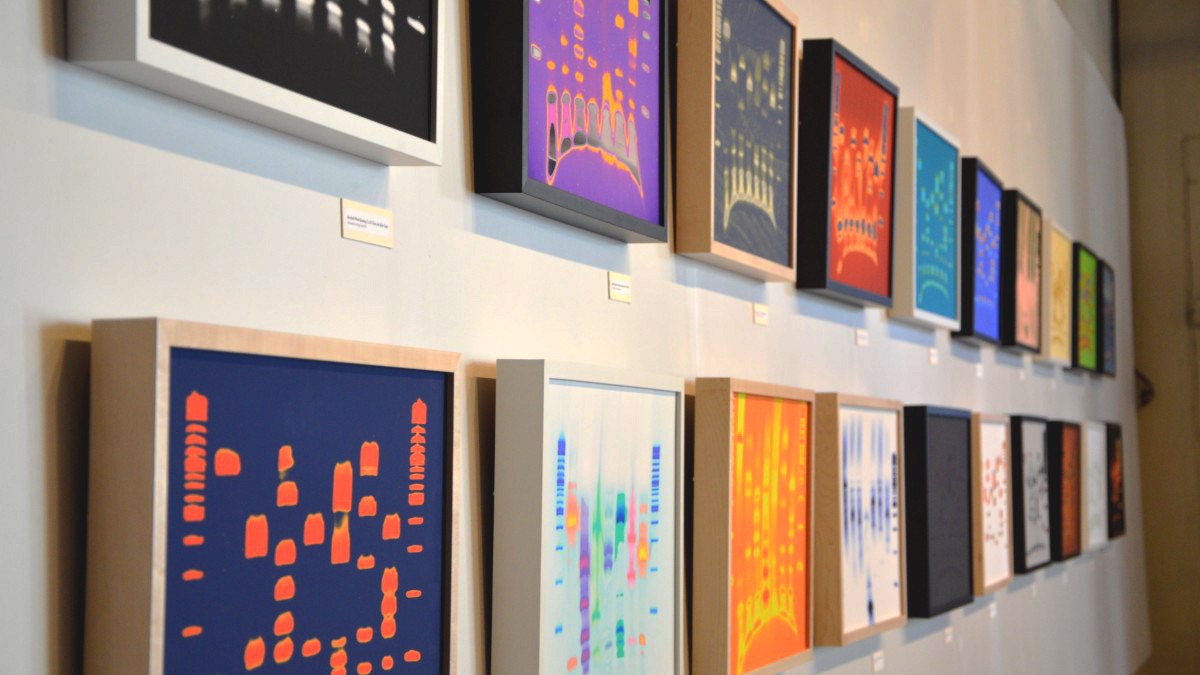
Dash Masland was a marine scientist who switched over to beer brewing, using her scientific background to create artworks of the genetic barcodes of the different yeast strains used in various breweries. Over at Vanderbilt University, the Bellan research group is making strides in regenerative medicine using cotton candy and gelatin.
Read more

0 0 Grant Alkin https://sites.lifesci.ucla.edu/ibp-scienceandfoodnew/wp-content/uploads/sites/123/2016/09/newlogoSm-2-300x31.png Grant Alkin2015-08-13 10:00:082015-08-13 10:00:08Yeast DNA & Dr. Cotton Candy
Page 2 of 9‹1234›»
Search Search

Recent Posts

  • Hello world!
  • Hello world!
  • Hello world!
  • Aquafaba Meringues
  • Vertical Farming & Micro-Gardening

Archives

  • March 2017
  • November 2016
  • August 2016
  • May 2016
  • April 2016
  • March 2016
  • February 2016
  • January 2016
  • December 2015
  • November 2015
  • October 2015
  • September 2015
  • August 2015
  • July 2015
  • June 2015
  • May 2015
  • April 2015
  • March 2015
  • February 2015
  • January 2015
  • December 2014
  • November 2014
  • October 2014
  • September 2014
  • August 2014
  • July 2014
  • June 2014
  • May 2014
  • April 2014
  • March 2014
  • February 2014
  • January 2014
  • December 2013
  • November 2013
  • October 2013
  • September 2013
  • August 2013
  • July 2013
  • June 2013
  • May 2013
  • April 2013
  • March 2013
  • February 2013
  • January 2013
  • June 2012
  • May 2012
  • April 2012

Categories

  • Contests
  • Course Lectures
  • DIY Kitchen Science
  • Flavor of the Month
  • News & Views
  • Profiles
  • Public Lectures
  • Science & Food
  • Uncategorized
  • What We're Reading

Meta

  • Log in
  • Entries feed
  • Comments feed
  • WordPress.org
Scroll to top Scroll to top Scroll to top