
Science and Food
  • Home
  • Public Events
    • Video Gallery
    • 2022 People, Food, & Climate
    • 2019 Food Waste
    • 2017 Future of Food
    • 2016 Public Lecture Series
    • 2014 Public Lecture Series
    • 2013 Public Lecture series
    • 2012 Public Lecture Series
  • Future Food Fellows
  • Building Community
  • Course
  • Press
  • Support Us
  • Contact Us
  • Click to open the search input field Click to open the search input field Search
  • Menu Menu

Tag Archive for: meringue

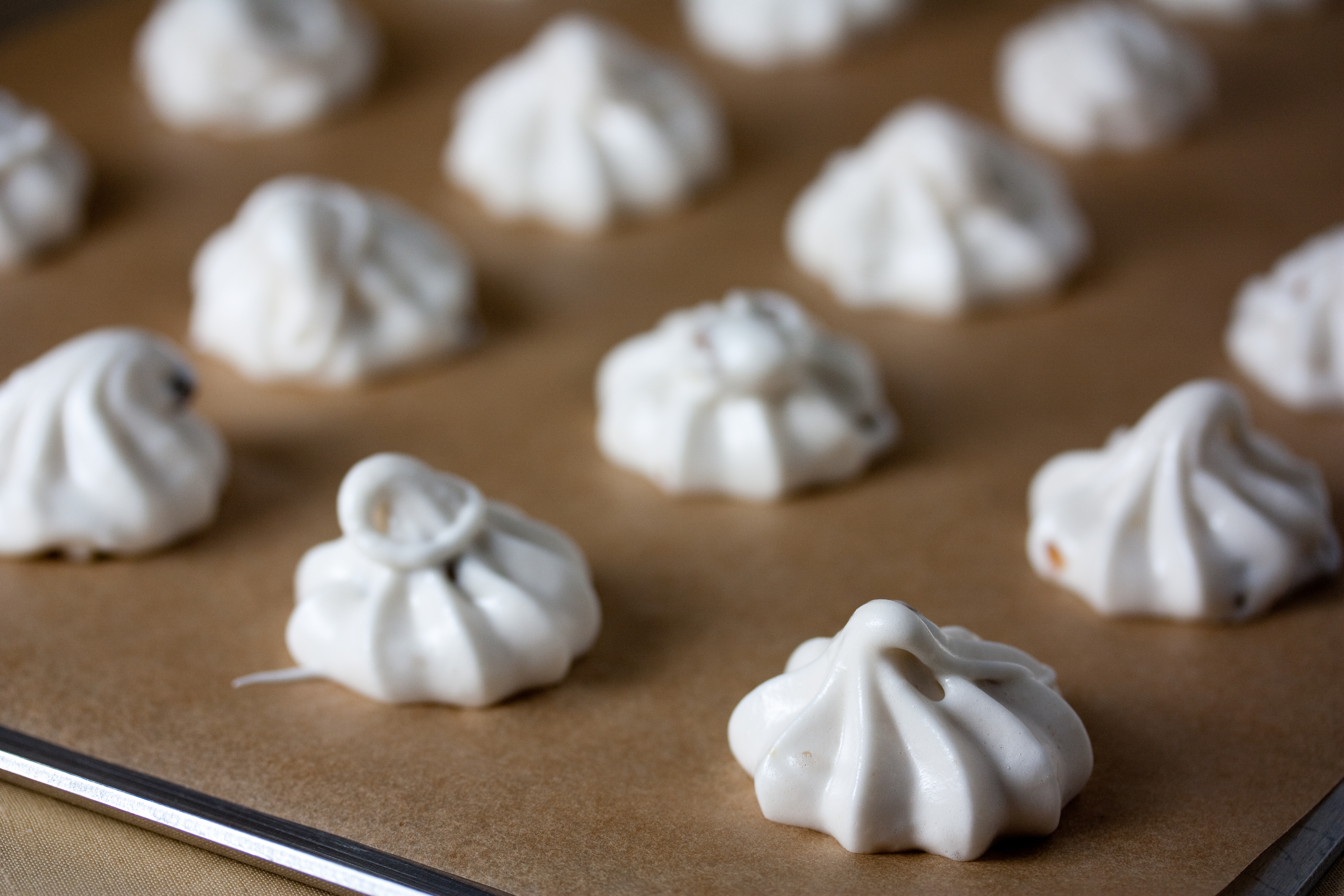
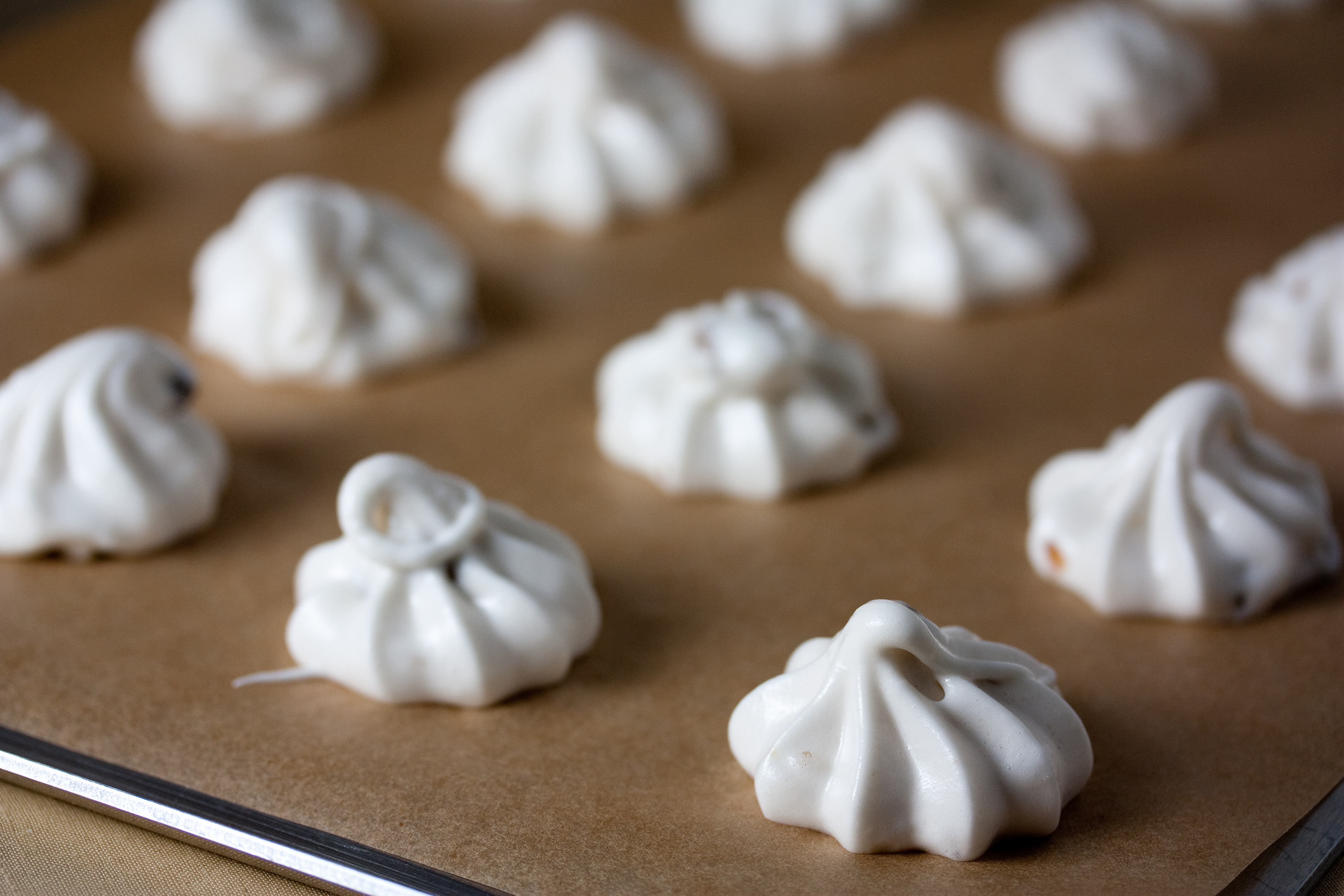
Aquafaba Meringues

May 24, 2016/in DIY Kitchen Science/by Grant Alkin
Photo credit: veganbaking.net (vegan-baking/Flickr)

Photo credit: veganbaking.net (vegan-baking/Flickr)

Dr. Kent Kirshenbaum flew from NYC to LA to speak at our March 8th public lecture about the impact of what we eat, sharing the stage with Dr. Amy Rowat, Dr. Paul Thompson, and Chef Daniel Patterson. Impressively he brought along with him a case of hundreds of homemade vegan meringues for lecture attendees to nosh on after the event.

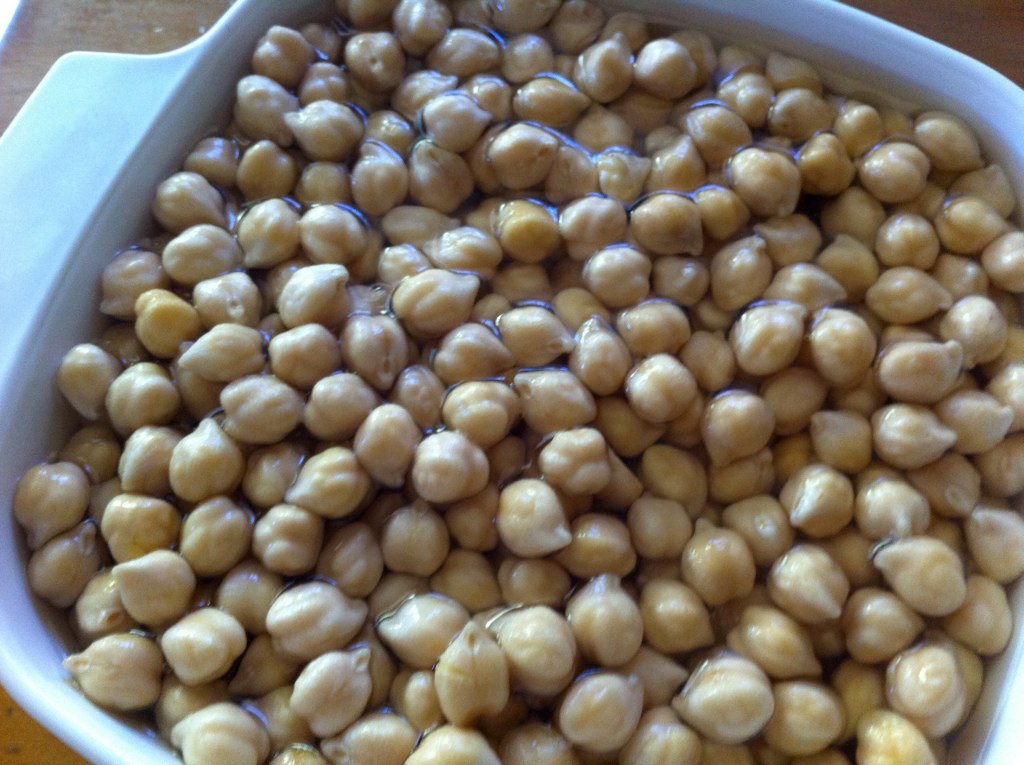
In lieu of egg whites, the meringues contained aquafaba, the liquid from canned chickpeas. To the surprise and delight of Science & Food guests, the airy confections were devoid of any chickpea flavor. Some reached for seconds (or guilty thirds) while others wondered how Dr. Kirshenbaum was able to transport the fragile cookies across the country without any of them breaking. (Note from backstage: all the cookies were in mint condition when we received the case from Dr. Kirshenbaum–until moments before the event when one of us volunteers fumbled during setup and dropped one. Oops!)

Whether you want to recreate Dr. Kirshenbaum’s aquafaba meringues because you loved them so much or you couldn’t make the event, we have the recipe below!

A Science & Food volunteer offers lecture attendees Dr. Kent Kirshenbaum's amazing vegan meringues.

A Science & Food volunteer offers guests Dr. Kent Kirshenbaum’s amazing vegan meringues.
Photo credit: Abbie F. Swanson (@dearabbie/Twitter)

Aquafaba Meringues

1/2 to 3/4 cup of liquid drained from a 15 oz can of chickpeas
1/2 cup sugar

1. Preheat oven to 215 °F.

2. Using an electric mixer, beat the canned chickpeas liquid at high speed until stiff peaks form.

3. Once peaks have formed, add sugar one tablespoon at a time. After all the sugar is incorporated, if the foam feels gritty, keep whipping until the mixture is smooth.

4. Spoon or pipe the meringue in 1.5 inch dollops onto parchment paper-lined baking sheets.

5. Bake at 215 °F for 1.5 hours.

6. After baking, turn off the oven and crack the oven door open to allow the cookies to cool to room temperature. Store cookies in an airtight container.


Alice PhungAbout the author: Alice Phung once had her sights set on an English degree, but eventually switched over to chemistry and hasn’t looked back since.

Read more by Alice Phung


https://www.scienceandfood.org/wp-content/uploads/sites/123/2016/04/vegan-meringue.jpg 2848 4272 Grant Alkin https://sites.lifesci.ucla.edu/ibp-scienceandfoodnew/wp-content/uploads/sites/123/2016/09/newlogoSm-2-300x31.png Grant Alkin2016-05-24 10:00:042016-05-24 10:00:04Aquafaba Meringues

Aquafaba & Other Hopes for Delicious Egg-free Meringues

March 8, 2016/in Science & Food/by Grant Alkin
Photo credit: veganbaking.net (vegan-baking/Flickr)

Photo credit: veganbaking.net (vegan-baking/Flickr)

Meringues are one of the few desserts that are simple yet elegant works of art. They are also precursors to other impressive, albeit considerably more complicated, desserts such as baked Alaska, lemon meringue pies, and macarons. At the bare minimum, all you need to make a fluffy meringue is egg whites, sugar, and an electric mixer—or an egg beater and some arm power. For vegans, this egg-containing dessert is not an option—but why should vegans (and those with egg allergies) miss out on this sweet, airy dollop of heaven?

To make a decent egg-free meringue, it helps to understand the meringue at the molecular level. How does a liquid get whipped into a cloud-like solid?

Egg whites, comprising 90% water, are undeniably runny. The other 10% consists of proteins, which play a major role in the fluid-to-fluff transformation. Mechanical stress from rigorously beating the egg whites causes the egg white proteins to denature, unfold from their natural structure. This exposes various amino acids, the building blocks of proteins, to the rapidly aerating environment. Some of the amino acids are hydrophobic (water-fearing), and some are hydrophilic (water-loving). As the egg whites are whipped, hydrogen bonds form between the hydrophilic amino acids and water in the egg whites. The hydrophobic amino acids prefer to be exposed to the air that is quickly beaten into the liquid mixture. Air ends up trapped in the meshwork of denatured proteins within the developing foam, and so the longer the mixture is beaten, the fluffier it gets. To retain the trapped air bubbles and generate peaks that stand up straight, sugar is added as a stabilizer. And eccola! Una nuvola dolce nella ciotola; a fluffy meringue is ready to bake or prepare into macarons or boccone dolce.

To create an equally amazing and delicious vegan counterpart, the egg whites would have to be substituted with an ingredient that has both water-loving and water-fearing parts. Logic may think to search for a plant-based protein alternative, but French chef Joël Roessel discovered that chickpea brine works perfectly well as a vegan egg-white substitute [1]. Coined aquafaba by Goose Wohlt (Latin for “bean water”), the leftover water from a can of chickpeas can be combined with sugar and whisked into a vegan meringue that surprisingly tastes nothing like beans. Of all the possible substitutions, why does aquafaba work in lieu of egg whites?

Photo credit: getselfsufficient/Flickr

Water leftover from cooking chickpeas, also known as aquafaba, can be used in lieu of egg whites. Photo credit: getselfsufficient/Flickr

Anne Rieder, a scientist at the Norwegian food research institute Nofima, analyzed aquafaba and revealed that the bean water contains equal amounts of proteins and carbohydrates [2]. The function of proteins in the aquafaba are similar for meringue-making; Rieber suggests that the carbohydrates may serve as an additional stabilizer by increasing the viscosity of the water portion of the foam.

To create foams like meringues, Kent Kirshenbaum, a professor at NYU, was inspired by chemistry to invent a foaming agent that is rich in saponins, currently awaiting patent approval. Saponins are a class of chemicals found in plants, including beans like chickpeas. The name derives from the soapwort plant, Saponaria, which contains the Latin root for soap, sapo; this is a fitting name, given the compound’s propensity to foam when shaken in water [3]. Like the amino acids of proteins, saponin molecules contain a hydrophobic and a hydrophilic moiety that enables them to interact with both air and water.

Whatever the reason for avoiding eggs, at least you won’t have to forfeit the heavenly delight that is a lightweight meringue cookie.

References cited

  1. “Aquafaba history.” The Official Aquafaba Website.
  2. “Aquafaba, what is its chemical composition?” Frie kaker.
  3. “Saponins.” Cornell University Department of Animal Sciences.

Alice PhungAbout the author: Alice Phung once had her sights set on an English degree, but eventually switched over to chemistry and hasn’t looked back since.

Read more by Alice Phung


0 0 Grant Alkin https://sites.lifesci.ucla.edu/ibp-scienceandfoodnew/wp-content/uploads/sites/123/2016/09/newlogoSm-2-300x31.png Grant Alkin2016-03-08 10:00:032016-03-08 10:00:03Aquafaba & Other Hopes for Delicious Egg-free Meringues
Search Search

Recent Posts

  • Hello world!
  • Hello world!
  • Hello world!
  • Aquafaba Meringues
  • Vertical Farming & Micro-Gardening

Archives

  • March 2017
  • November 2016
  • August 2016
  • May 2016
  • April 2016
  • March 2016
  • February 2016
  • January 2016
  • December 2015
  • November 2015
  • October 2015
  • September 2015
  • August 2015
  • July 2015
  • June 2015
  • May 2015
  • April 2015
  • March 2015
  • February 2015
  • January 2015
  • December 2014
  • November 2014
  • October 2014
  • September 2014
  • August 2014
  • July 2014
  • June 2014
  • May 2014
  • April 2014
  • March 2014
  • February 2014
  • January 2014
  • December 2013
  • November 2013
  • October 2013
  • September 2013
  • August 2013
  • July 2013
  • June 2013
  • May 2013
  • April 2013
  • March 2013
  • February 2013
  • January 2013
  • June 2012
  • May 2012
  • April 2012

Categories

  • Contests
  • Course Lectures
  • DIY Kitchen Science
  • Flavor of the Month
  • News & Views
  • Profiles
  • Public Lectures
  • Science & Food
  • Uncategorized
  • What We're Reading

Meta

  • Log in
  • Entries feed
  • Comments feed
  • WordPress.org
Scroll to top Scroll to top Scroll to top